
What Is Roof Ice Damming On A NJ Home?
Roof Ice damming in New Jersey, sometimes referred to as ‘roof ice dams,’ will occur if ice builds on the lower edge of a sloped roof. It’s fairly common with heated NJ homes when there are cold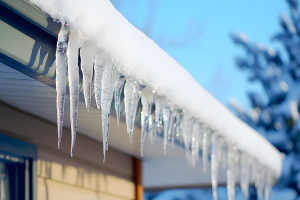 and snowy conditions. As has been the case in the winter of 2026 for NJ, ice built up on the edge of a roof acts like a dam and blocks melting snow above from rolling off the roof or into its gutters. When a frozen dam occurs, it can trap water from melting snow behind the ‘dam’ and/or restrict normal drainage. This increases the chances that water will get into the home through normally inaccessible entry points.
Our recent snowstorm activity in NJ, followed by extreme cold, is causing ‘ice damming’ up along roof edges and eaves. And it’s not related to roof installations or a random roof condition; it can occur on the best of roofs, regardless of material, including flat and pitched. This is a common NJ weather-related issue that can affect both new and older homes.
Why Do Ice Dams Form in NJ?
Heat from the inside of a New Jersey home often finds its way into the attic. It can happen as a result of a few different things, including
- poor house to attic sealing,
- poor insulation in the attic,
- poor ventilation in the attic,
- air leaks around lights,
- air leaks through various vents, and/or
- air coming through the chimneys.
Heat can then warm a roof unevenly, maybe to its middle and/or upper areas, and cause any snow above to melt. Water melts and runs down toward the frozen overhangs below, which are rarely ever heated by the house. As water reaches that cold edge or overhang, it refreezes and builds a thick ice ridge or ‘ice dam.’ As more melting water runs down, it backs up behind the ice ridge, pools, and begins to find its way under shingles, through seams, and/or into the NJ home’s roof structure.
In time, trapped water can sneak into the home, damaging insulation, walls, ceilings, and, as a result, even lead to structural or MOLD-related issues.
For My NJ Home, What Can Be Done To Prevent Ice Damming or Ice Dams?
What would be ideal for the average home is to have the entire roof surface be a uniform cold temperature, including all the way down to its eaves or lower edges. What would be necessary to do it might include any of the following:
- along the eaves, when repairing or replacing roofing materials, consider adding an ice/water shield or a waterproof membrane under shingles,

- especially in colder climate areas, add high R-value or R-49+ attic insulation,
- improve ventilation, including soffit vents and/or ridge vents that circulate cold air, and/or
- seal air leaks from the house into attic spaces.
A shorter-term fix, for when snow is accumulating, is to remove it from the roof. There are ice rakes on the market, and usually available at local hardware stores. Be careful, you want to avoid damaging the roof in what are rough conditions. And if you have been, or are going through ‘Ice Damming’ and feel that you may need to inspect or test for MOLD, give us ‘Healthy Living Mold Inspections’ a call at (551) 206-9472.